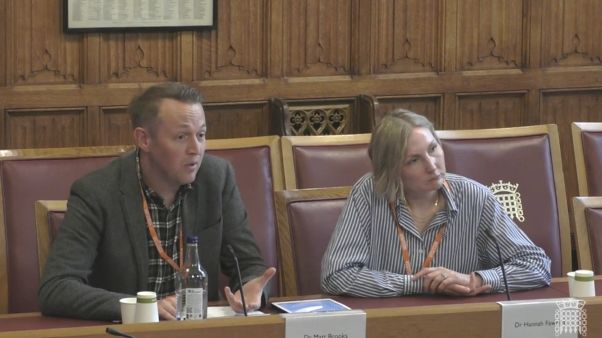
Our team were called to give evidence to the Justice and Home Affairs Inquiry into Juror Support at Westminster. On Wednesday 2nd September, Dr Hannah Fawcett and Dr Matt Brooks answered questions posed by the committee on how and why jury service can impact wellbeing and the support that jurors need.
For academics, much of our time is spent teaching and conducting research; opportunities to discuss that research directly with policymakers are much rarer. The experience was both exciting and humbling, given the importance of the issues being considered.
Our research focuses on the experiences of jurors who are exposed to distressing and traumatic evidence, but who also may experience other stressors as part of the courtroom environment. This includes being in an unfamiliar courtroom environment, isolated from family and friends, deliberating with strangers, prior mental health or trauma exposure, accessibility issues in courtroom buildings, concerns about expenses, and being prevented from ever discussing deliberations once the trial has ended.
Our research, and that of others, has identified a range of potential consequences of jury service, including stress, intrusive memories, and difficulties readjusting. Some of these changes may not happen immediately, and some can be long lasting. Other jurors do find the experience rewarding and interesting, and many do not experience any negative psychological changes, or naturally recover. Many other impacts are unknown however, as juror wellbeing is not routinely monitored and specialist support in England and Wales is non-existent.
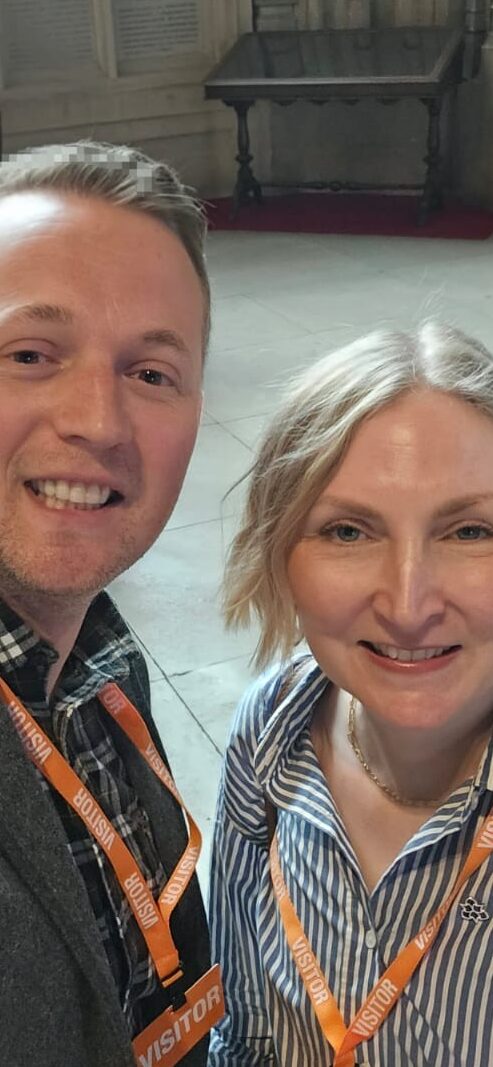
The Committee’s inquiry is examining these issues in detail, as well as the adequacy of current support arrangements, and what further measures may be needed. During the session we were able to discuss evidence from our own research, as well as the wider academic literature, and our own observations of practice in relation to jurors, in relation to jurors’ experiences, psychological impacts, and potential approaches to support.
We made 11 recommendations to the committee:
- Provide pre-trial preparation guidance for jurors.
- Review and revise juror expense allowances.
- Formalise opportunities for potential jurors to disclose mental health and previous trauma experiences prior to empanelment.
- Instigate mental health awareness training for all judiciary and court staff who come into contact with jurors.
- Establish national minimum standards for juror accommodation.
- Limit use of graphic evidence to educational purposes only.
- Government endorsement of Juror Appreciation Week.
- Make specialist post-trial support available for all jurors in all cases.
- Produce a jury service handbook for employers.
- Issue guidance for GPs, NHS staff, court staff, and judges on juror disclosure rules.
- Remove disclosure restrictions for therapeutic settings.
We thank the Committee for taking up this important issue and for our invitation to speak at this inquiry. We look forward to hearing the inquiry’s recommendations and the subsequent government response.